image courtesy of NASA
FRONTIERS UNBOUND: EXPLORING EXTREME ENVIRONMENTS
Cluj-Napoca, Romania,12-14 September, 2024
Frontiers Unbound: 2024 Event Highlights


Frontiers unbound: Exploring Extreme Environments
Welcome to a groundbreaking conference that takes an unprecedented exploration of extreme environments from a human-centric perspective. Delve into Earth’s most ancient ecosystems and embark on journeys into the vastness of outer space, exploring territories once deemed uninhabitable. Join a diverse group of experts as they unravel the complexities of these formidable yet fascinating habitats. Through captivating discussions and pioneering research presentations, we aim to uncover the secrets of adaptation and resilience in extreme conditions. Be part of this extraordinary journey to decipher the mysteries of extreme environments and the remarkable adaptability of life in the face of nature’s harshest challenges.
“On the endless scale of time, humanity strives slowly,
once dragged down into the darkness by the superstitions of ignorance, other
times drawn up to the light by the truths of science (…). To know or not to
know, this is the question.”

Emil G. Racoviță

Guest Speakers:
Prof. Stephen James Mojzsis (Hungary), Research Centre for Astronomy and Earth Sciences (Hungarian Academy of Sciences) and Department of Geological Sciences, University of Colorado at Boulder
Presentation title:
Hadean recipes
Stephen Mojzsis is a tenured Research Professor at the Konkoly Observatory, Origins Research Institute, HUN-REN Research Centre for Astronomy and Earth Sciences (CSFK) in Budapest, Hungary. He has more than 30 years of research experience studying the geochemical evolution of the Earth and planets using field-, laboratory- and modelling-based methods, to explore the physical and chemical conditions that yield the planets in the Solar System and beyond.
Mojzsis’s research achievements and major discoveries use stable-, radiogenic isotope and trace element geochemistry in mineral chemistry and metamorphic petrology. In this realm he documented ancient protoliths and unlocked records of atmosphere-ocean-crust interactions over geologic time. He also explores numerical and analytical modelling of planet formation, accretion, and how records of these thermal processes are contained in minerals. He is the main driver of a new discipline termed Geoastronomy, which applies Earth-derived knowledge to the origin and evolution of cosmochemically Earth-like planets.
Dr. David Diez del Molino (Sweden), Centre for Palaeogenetics (CPG), Stockholm University
Presentation title:
Woolly mammoth genomic adaptations to the extreme climate shifts of the Ice Age
David Díez del Molino is group leader at the Centre for Palaeogenetics (Stockholm University). His work revolves around the study of animal and human populations using ancient, historical, and modern genomic data. With a background in population genetics, computational genomics, and bioinformatics, his research interests span multiple exciting areas. These include investigating the genomic factors underlying species extinction, exploring the decline and genomic adaptations of insect pollinators to human-driven environmental changes, and using ancient/historical DNA to understand changes in genomic diversity in endangered species.
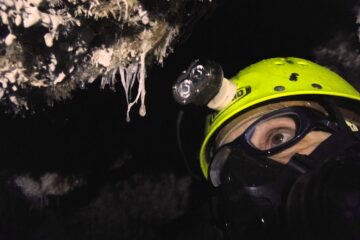
Dr. Penelope Boston (USA), Director of NASA’s Astrobiology Institute (NAI), at NASA Ames, Moffett Field
Presentation title:
Caves across the Solar System
Dr. Penelope Boston is currently Portfolio Scientist for New Business and Employee Development (Code S, Science) at NASA Ames Research Center, in the Silicon Valley area of California working to develop research and future mission concepts. She formerly served as Director of the NASA Astrobiology Institute (2016-2020). Boston was Professor and Department Chair of the Earth and Environmental Sciences Dept. at the New Mexico Institute of Mining and Technology as well as Associate Director of the National Cave and Karst Research Institute (2002-2016).
Personal research areas include geomicrobiology and astrobiology in extreme environments (caves and mines, hot and cold deserts, high latitudes and altitudes); geological processes creating caves on other planets; human life support issues in space/planetary environments; and use of robotics and other technologies to assist exploration and science in extreme Earth and extraterrestrial environments. Boston is author of 250+ technical and popular publications, editor of 4 volumes, and her work has featured in ~300+ print and broadcast media outlets. She is a poet, artist, animal lover, and friendly.
Dr. Philippe Choler (France), Centre national de la recherche scientifique (CNRS)
Presentation title:
High mountain ecosystems and snow cover in a changing climate: for better or for worse
Phillippe CHOLER is a Senior Researcher (DR) at CNRS working at the Laboratoire d’Ecologie Alpine (Univ. Grenoble Alpes). His primary research focuses on the structure, dynamics, and functioning of mountain ecosystems with a particular interest in examining connections between biodiversity, soil, (micro)climate, and land use. His recent work investigates the long-term trends of vegetation cover in above treeline ecosystems by using high resolution remote sensing. Ongoing work aims at elucidating how snow cover changes impact soil microclimate and ecosystem dynamics at high elevation. Philippe holds a Habilitation à Diriger les Recherches (HDR) and a Ph.D. in Plant Ecology from the Univ. Grenoble Alpes, France. He has held significant research and teaching positions throughout his career, including being the French National Coordinator for eLTER and leading a Research Department at Univ. Grenoble Alpes. His publication record includes more than 11,000 citations.
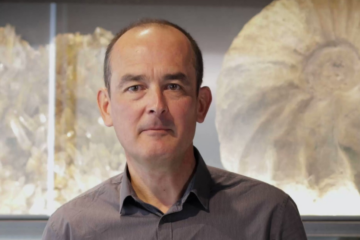
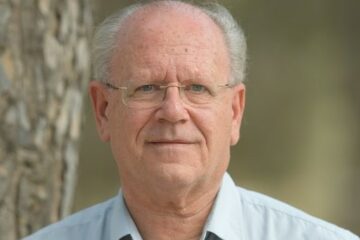
Prof. Aharon Oren (Israel), Hebrew University of Jerusalem, Israel
Presentation title:
Given to salt: Novel insights into the diversity of halophilic microorganisms and their functioning in hypersaline ecosystems
Professor Aharon Oren (Hebrew University of Jerusalem, Israel) is renowned for his exceptional research in the microbiology and ecology of hypersaline lakes, as well as his significant contributions to the classification and nomenclature of prokaryotes. In 2019, he was honored with a Doctor Honoris Causa from Babeș-Bolyai University of Cluj-Napoca, acknowledging his impactful scientific achievements and dedicated support for the advancement of extremophiles’ research and education.
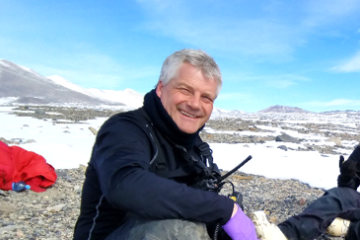
Senior Researcher Scott Tighe , UVM Integrative Genomics facility and owner of the microbiome –focused company; Extreme Genomics LLC
Presentation title:
Sampling and DNA Analysis of Extreme Environments
Scott Tighe Is currently senior researcher analyst at the UVM Integrative Genomics facility and owner of the microbiome –focused company; Extreme Genomics LLC. His expertise is all areas of genomics and microbiology including next generation sequencing (Illumina, Singular G4, and Oxford Nanopore MinION, GridION, and PromethION instrument), Sanger sequencing, PCR (PCR, RTqPCR, ddPCR) , single cell analysis, flow cytometry, metagenomics, biophotonics, and biomolecular detection of ultra low biomass nucleic acids in the environment. He has authored over 100 papers in genomics and developed multiple commercial reagents for metagenomics. He is currently Chair of the ABRF Metagenomics Research Group and Extreme Microbiome Project (XMP), co-leader of the International Metagenomics and Microbiome Standards Alliance at NIST, Board member of the Genomics Standards Consortium, and developer the NASA uTitan payload deployed to the International Space Station to study DNA extractions in zero-gravity in late 2023. .
Organizers